Thirty years ago (Pole, 1994), I suggested all of New Zealand’s current flora may have arrived over the sea, by long-distance dispersal. This was counter to a prevailing idea that at least some of our plant lineages have been on New Zealand since it became isolated from the rest of Gondwana, roughly 80–70 Ma, in the Late Cretaceous.
In that paper, I suggested that New Zealand’s cedars – Libocedrus/kawaka, may have the longest lineage of any extant New Zealand plant – extending back to the Paleocene (younger than the Late Cretaceous). That was based on fossils from Mt Somers, in Canterbury. A caveat though, the fossils are clearly an imbricate leaved Cupressaceae, but more and better fossils might one day decide they are some extinct genus, although closely related to Libocedrus. In any case, I’ve never seen any Cupressaceae in the Late Cretaceous, or of any other extant New Zealand lineage. There remains no good evidence of any extant plant lineage going back to when when New Zealand broke away from Gondwana.
But what about the other ‘direction’ in time? When did the last lineages of plants that headed off into the Pacific, when New Zealand broke away from Gondwana, become extinct? This is exactly what a paper by Tianhua He and Byron B Lamont (both of Curtin University, Australia) and Bruno Fogliani (of the Institut Agronomique néo-Calédonien, New Caledonia) investigated.
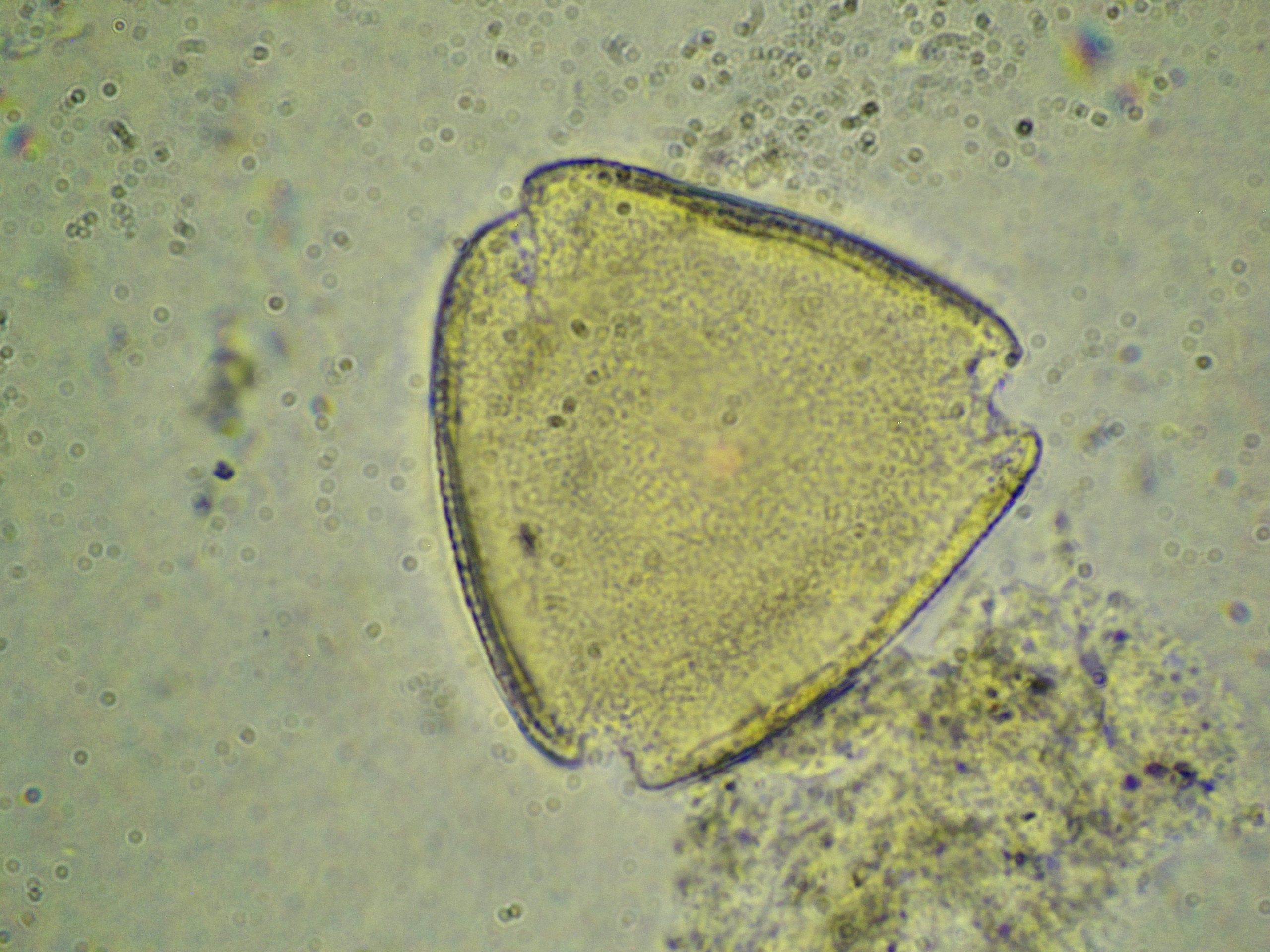
He et al. (2016) took a close look at one genus, Beauprea (in the Protea family), which now now lives only in New Caledonia. Its pollen is distinctive, and ‘Beauprea-type’ pollen (e.g. Martin, 1973; Milne, 1998) has been found in Australia, New Zealand and South America (New Caledonia itself, almost lacks a plant fossil record). Based on the fossil record of the pollen, and ‘molecular phylogenetic analysis’, Beauprea appears to have diverged from the rest of the family about 88 million years ago, and been spread across parts of Australia, Antarctica, and New Zealand, at least by 82 million years ago, in the Late Cretaceous – before New Zealand broke away (Beauprea later spread to South America).
Based on the fossil record, Beauprea then had a continuous presence in New Zealand, up until its extinction there. That extinction was remarkably recent, and is likely to result from cooling as the glacial-interglacial cycles intensified (e.g. Pocknall and Crosbie, 1988). I’ve reported Beauprea leaf fragments from Arapito, in the Karamea (Pole, 2007), dating broadly to around 3.5 to 1.81 million years ago (see further information in Mildenhall, 1978). However, the very youngest occurrence in New Zealand appears to be about one million year-old Beauprea-type pollen from the north of the North Island (in a thesis, Sandiford, 2001, reported in He et al., 2016).

Libocedrus may be the oldest living plant lineage in New Zealand (Pole, 1994), while Beauprea (and a few other taxa) appear to have been the last remaining Gondwanan lineages (He et al., 2016).
So He et al’s conclusion was that Beauprea was an example of a genuine Gondwanan heritage in New Zealand – and not a result of long-distance dispersal across the ocean. That seems both fine and likely to me. But I would disagree with some of their arguments as to why “transoceanic dispersal … via ocean currents … is unlikely”. One is that He et al (2016) wrote:
“Transoceanic dispersal of Beauprea via ocean currents is unlikely for four reasons. First, the distributions of modern Beauprea species are mostly in the mountainous regions of New Caledonia, away from watercourses and coastal environments where water dispersal would be possible. Beauprea-type pollen fossils are rarely found in coastal environments, which led Pocknall and Crosbie [1988] to suggest that Beauprea in the past only occupied habitats similar to where it now occurs in New Caledonia, that is, highlands some distance from the sea.”
That’s not what Pocknall and Crosbie (1988) suggested. They drew attention to the “low abundances” of Beauprea pollen in the fossil record. They proposed that this “may be a true representation of Beauprea in the vegetation of this interval, but could equally reflect the extensive distribution of coastal (lowland terrestrial and nearshore marine) environments in Late Cretaceous to Eocene time. Such environments would have been unsuitable for Beauprea based on its modern day distribution.”
Even in a late Oligocene estuarine deposit at Pomahaka, Southland, 35 samples had produced just one pollen specimen (Pocknall, 1982). However, the Miocene “inland deltaic environments in the Gore Lignite Measures yielded specimens more regularly” (sometimes up to 3-5% of the spore-pollen assemblages). Further inland, in Central Otago’s Miocene Manuherikia Group, “away from any known coastal climatic influence”, Beauprea-like pollen “is present in almost all samples, but never attains frequencies of greater than 1% (D. C. Mildenhall, pers. comm., 1984).”
Pocknall and Crosbie (1988) concluded: “A pattern is emerging which suggests that in the past Beauprea not only occupied habitats not far removed from those in which it is found today in New Caledonia, i.e., moderate altitude (300-500 m, high rainfall, no threat of frosts and some distance from the sea[a ‘)’ seems to be missing here], but also persisted in lowland rainforest communities that were dominated by Nothofagus brassi beech, Casuarina and Myrtaceae.”
That is, in the Early-mid Miocene, at least, Beauprea inhabitated lowlands – and sometimes coastal lowlands.
Beauprea appears to have had (and presumably still has) a very low pollen production, probably because it had (and has) very specialised pollinators (like insects or birds). So even though Beauprea plants may have been widespread, their pollen only rarely shows up in fossil samples. Nevertheless, its abundance in the regional vegetation did respond to environmental changes over geological time – something that Pocknall and Crosbie (1988) had recognised. The current restriction to mountains in New Caledonia is likely to reflect a “high rainfall, no threat of frosts” (Pocknall and Crosbie,1988) environment – an environment that in the mid Cenozoic, was found at higher latitudes and near sea-level.
He et al’s (2016) research has shown Beauprea to have been one of the last genuinely ‘Gondwanan’ lineages in New Zealand. With it’s extinction, and just a few others, all the remaining plant lineages in New Zealand are likely to have arrived across the sea, by long distance dispersal.
References
He, T., Lamont, B.B., and Fogliani, B. 2016. Pre-Gondwanan-breakup origin of Beauprea (Proteaceae) explains its historical presence in New Caledonia and New Zealand. Science Advances, 2(4):e1501648, DOI: 10.1126/sciadv.1501648.
Martin, A.R.H. 1973. Reappraisal of some palynomorphs of supposed proteaceous affinity. I. The genus Beaupreadites Cookson ex Couper and the species Proteacidites hakeoides Couper. Special Publications of the Geological Society of Australia, 4: 73-78.
Mildenhall, D.C. 1978. Palynomorphs from Miocene-Pliocene sediments, Grey Valley (K31-Metric), South Island, New Zealand. New Zealand Geological Survey Report PAL 24, 1–18.
Milne, L.A. 1998. Tertiary palynology: Beaupreadites and new Conospermae (Proteoideae) affiliates. Australian Systematic Botany, 11: 553-603.
Pocknall, D.T. 1982. Palynology of Late Oligocene Pomahaka estuarine bed sediments, Waikoikoi, Southland, New Zealand. New Zealand Journal of Botany, 20: 263-287.
Pocknall, D.T., and Crosbie, Y.M. 1988. Pollen morphology of Beauprea (Proteaceae): modern and fossil. Review of Palaeobotany and Palynology, 53: 305-327.
Pole, M. 1994. The New Zealand flora – entirely long-distance dispersal? Journal of Biogeography, 21: 625-635.
Pole, M. 2007. Plant-macrofossil assemblages during Pliocene uplift, South Island, New Zealand. Australian Journal of Botany, 55: 118–142.
Sandiford, A. 2001. Palynology and tephrostratigraphy of Quaternary coverbed sequences of the Auckland area, New Zealand. PhD Thesis, School of Environmental and Marine Sciences, The University of Auckland Library, Auckland.