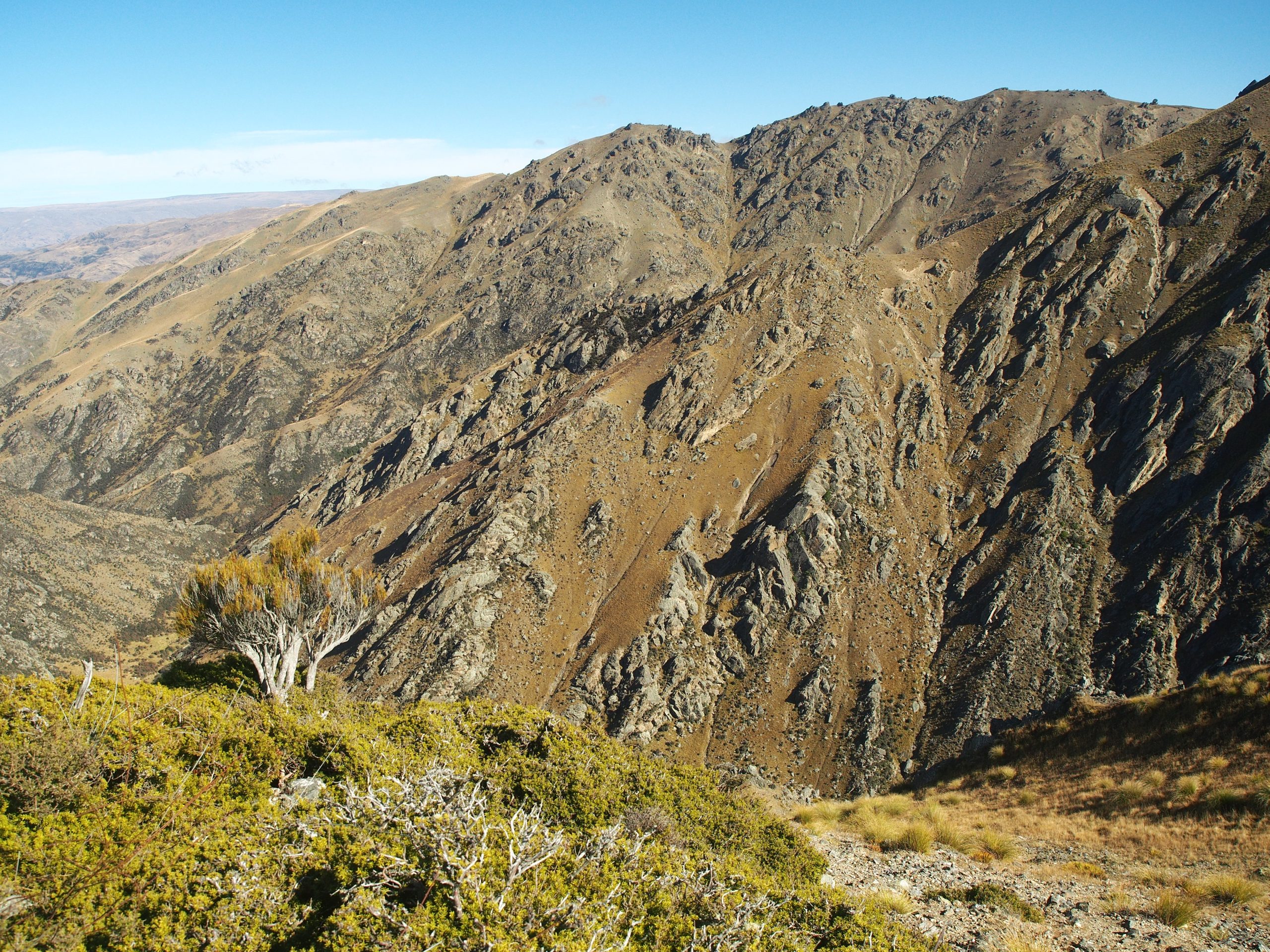
When Polynesians first discovered Aotearoa–New Zealand, much of the South Island — with few exceptions — was forested from the tree line to the coast. These forests had developed under a long-standing natural fire regime, and many were highly vulnerable to the new patterns of burning introduced by humans.
Rapidly following human arrival, fire eliminated vast areas of forest, transforming ecosystems that had persisted for millennia. Later, European settlement intensified this process. Forests were viewed both as a resource to be milled and as an obstacle to agriculture — and, paradoxically, as evidence of fertile land beneath. The result was further large-scale deforestation, often rapid and irreversible.
This List brings together a series of posts documenting the ecological destruction of southern New Zealand, focusing on forests and associated ecosystems that once existed across Otago, Southland, and Canterbury. They use historical records, maps, paintings, subfossil evidence, and other landscape clues, to reconstruct what has been lost — across both Polynesian and European eras.
Together, they form a regional archive of ecological change, showing how fire, land use, and cultural attitudes reshaped southern New Zealand’s landscapes long before modern conservation efforts began. This List will be updated as further material is added.
A) Polynesian-Era Impacts
These posts examine ecological change following initial human arrival, when altered fire regimes rapidly transformed fire-sensitive forests and shrublands.
The Lost Totara Forests of Central Otago
The ‘mystery’ of the logs scattered through the mountain tussocks.
Not only were kowhai forests important across Central Otago, but moa browsed on them.
Tuatara were once common in Central Otago – they probably vanished as the forest and associated shrublands were removed by fire.
Was there a Forest before Central Otago’s Kowhai Forest?
Papanui Bush was entirely removed – and a piece of the ‘last tree’ was presented to the Museum.
B) European-Era Impacts
Otago
Otago provides some of the clearest evidence for large-scale forest loss, preserved in place names, historical maps, paintings, and scattered subfossil remains.
Dunedin’s Saddlebacks/Tieke and Yellowheads/Mopua
Two of the birds that vanished, along with Dunedin’s forest.
Green Island Bush – Divide and Conquer
A case-example of selling off a forest as portions.
The Lost Ecosystem of the Leith Swamp Forest, Dunedin
Dense forest used to grow along the alluvial system of the lower Leith.
The Ancient Footpath from Otepoti-Dunedin to Moeraki
It’s one of the oldest cultural features of Aotearoa-New Zealand, and was important until the forest it circumvented, was removed.
Dunedin’s Ghost-Forests in 1901
One of our earliest detailed maps seems to show large areas of dead trees.
The Lost Bush of South Dunedin
The only record of a tiny patch of forest in what is now an urban neighbourhood, is in a few paintings, maps and photos.
The Lost Taieri/Taiari Bush, near Dunedin, New Zealand
Another forest known only from a few paintings.
Once a Vast Forest – Motatapu Track, New Zealand
Tramping a section of Te Araroa – the Motutapu Track, I saw only a couple of native bird species. How many would I have seen a thousand years ago?
Dunedin’s Bush in the early 1860s
What would the Lorax have said, if he had come to Dunedin, in about 1863?
Southland
Southland retains several wonderful ‘Bushes’.
The Lost Forests of Southland, New Zealand
The many ‘Bushes’ of Southland, are mostly just place names now.
Canterbury
Some of the driest examples of forest, sometimes dominated by kahikatea, are from Canterbury.
The Lost Forest of the Ashley River, Canterbury, New Zealand
A few stumps in a gravelly river bed are all that remain.
The Immolation of Waimate Bush, Canterbury, New Zealand
A fire destroyed a huge amount of one of our driest forests.
The Last Tree in Papanui Bush. And that last palm tree on Easter Island
Papanui Bush was entirely removed – and a piece of the ‘last tree’ was presented to the Museum.
Deans Bush–Pūtaringamotu and the Mystery of the Missing Tree Ferns
Tree ferns are oddly missing – were they all removed by enthusiastic collectors?